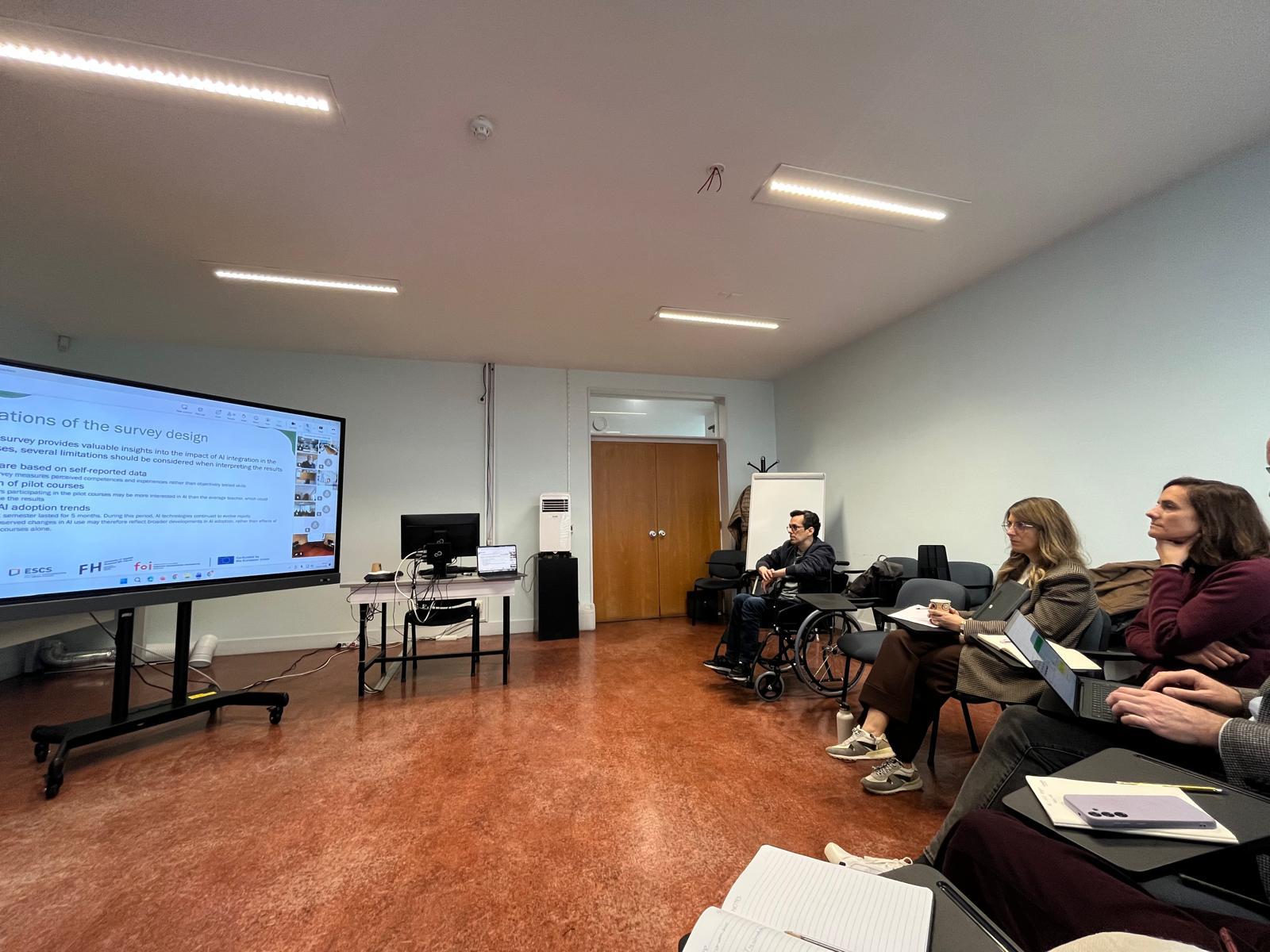
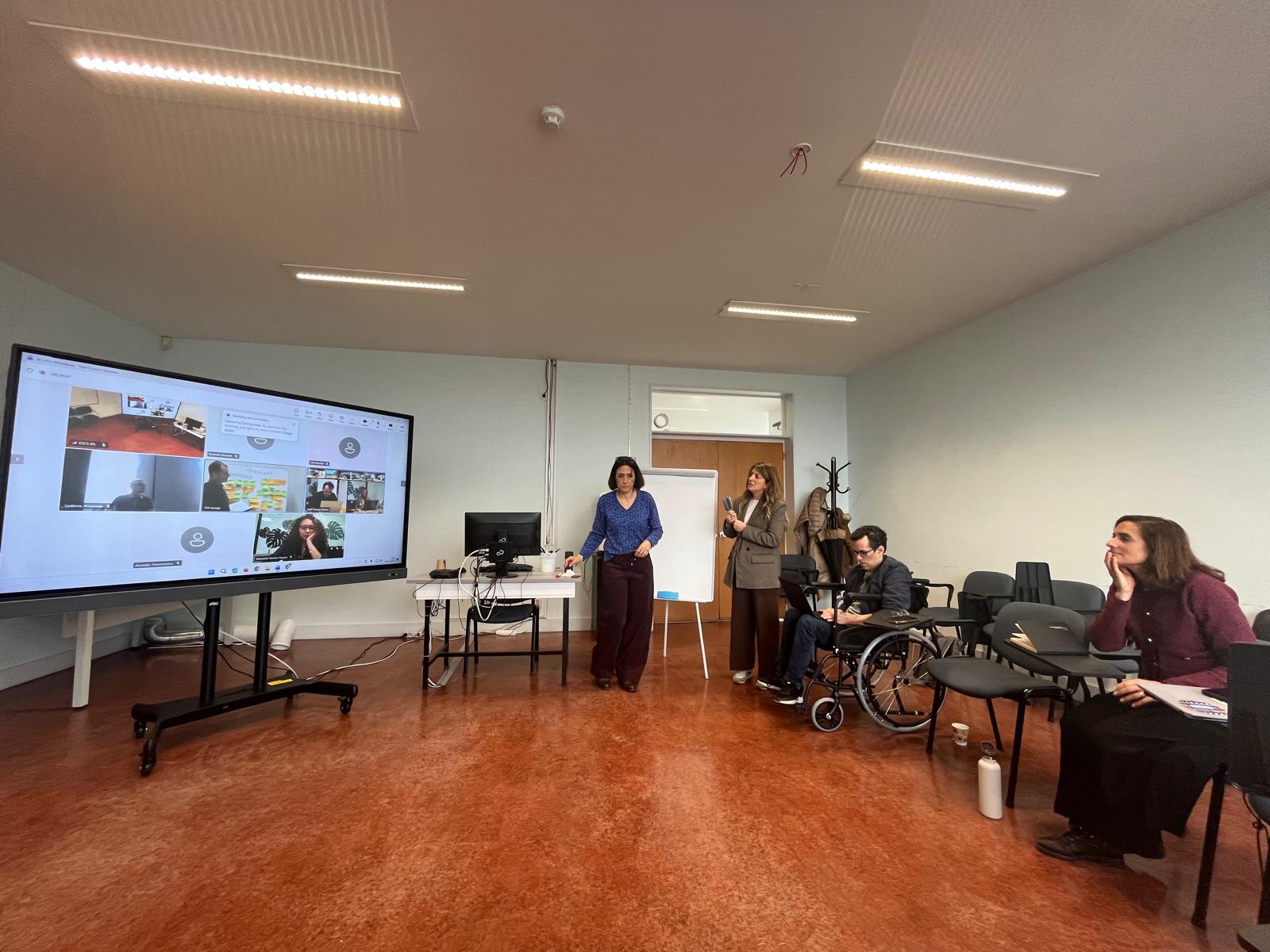
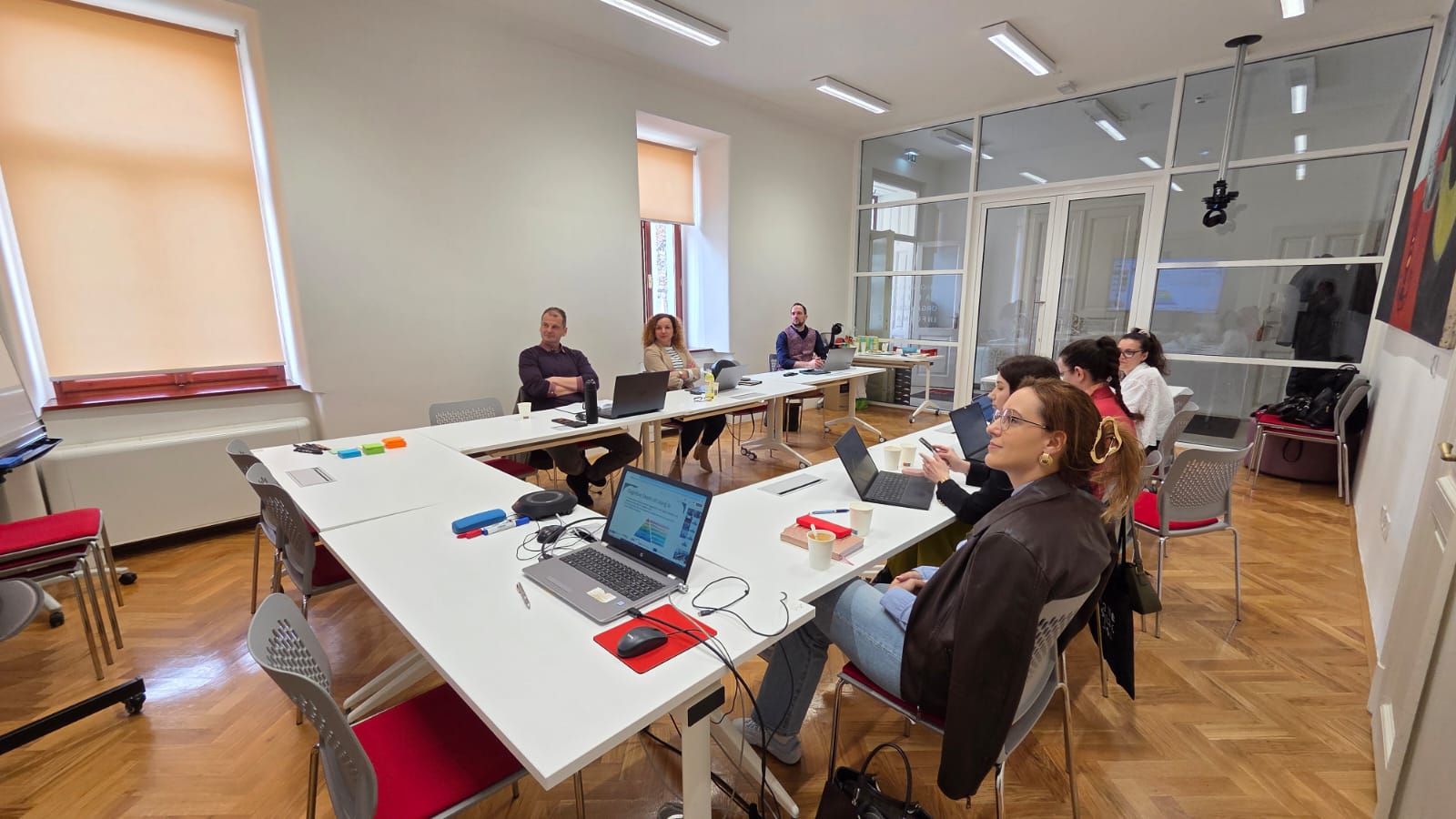
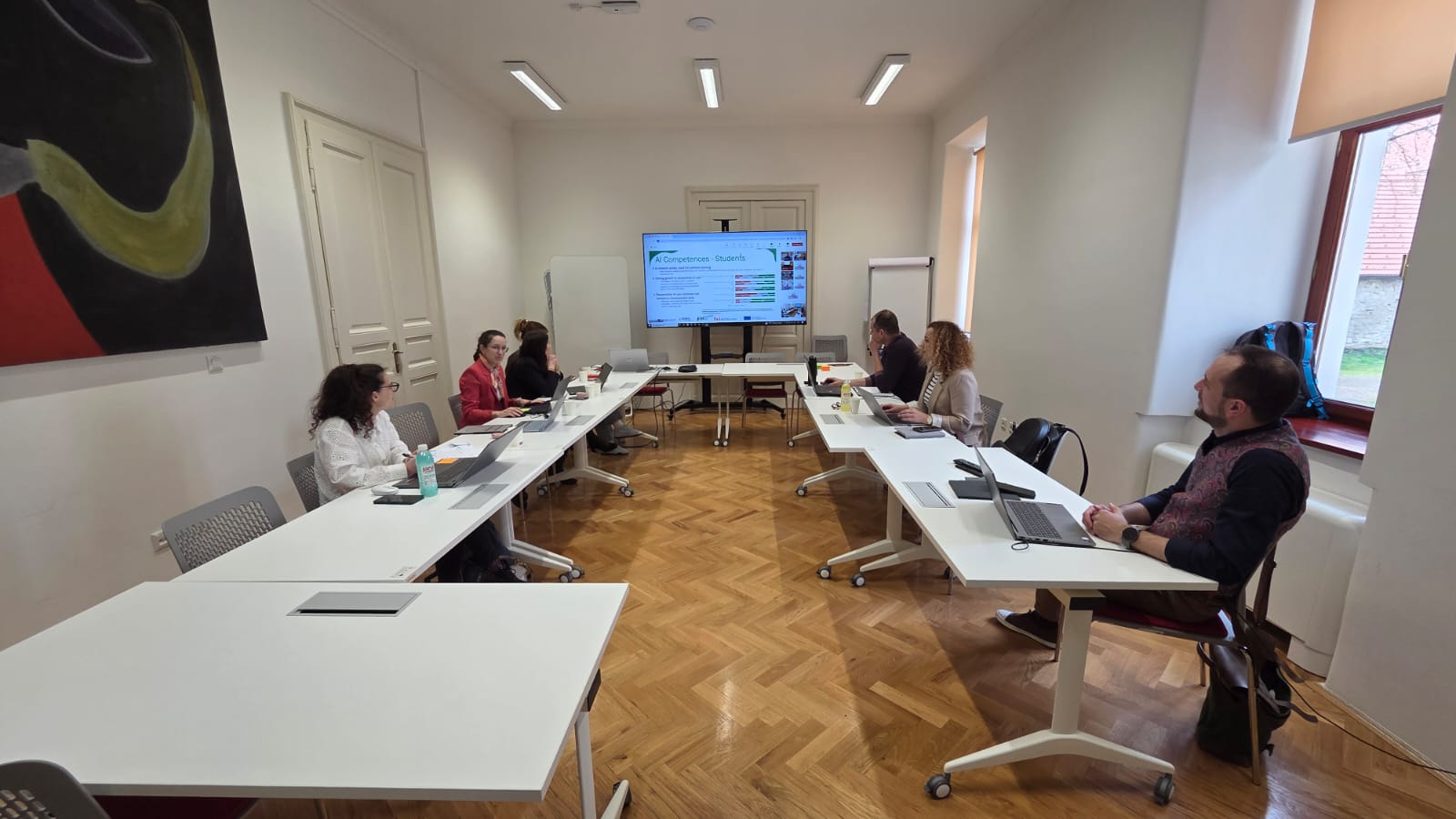
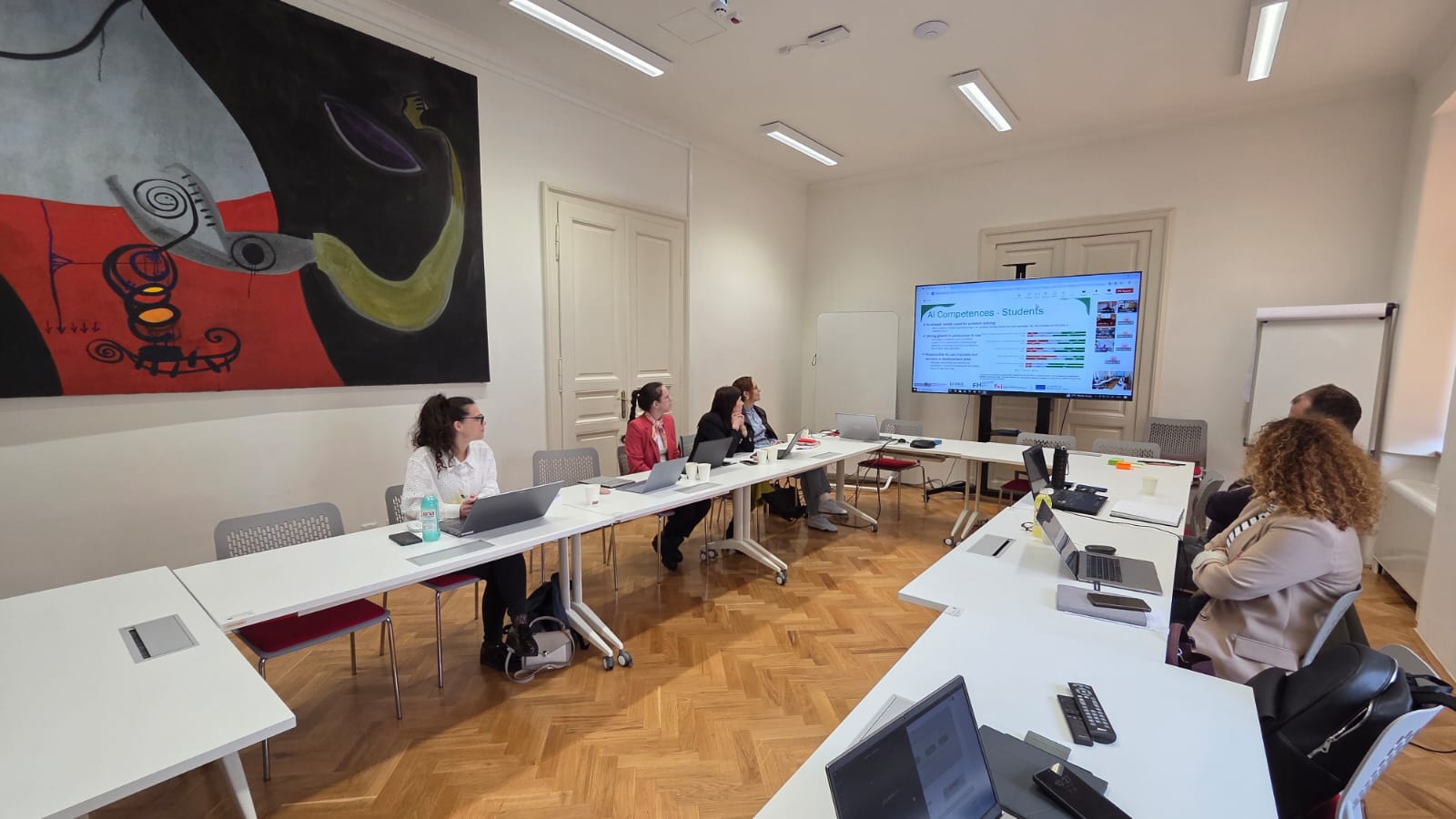
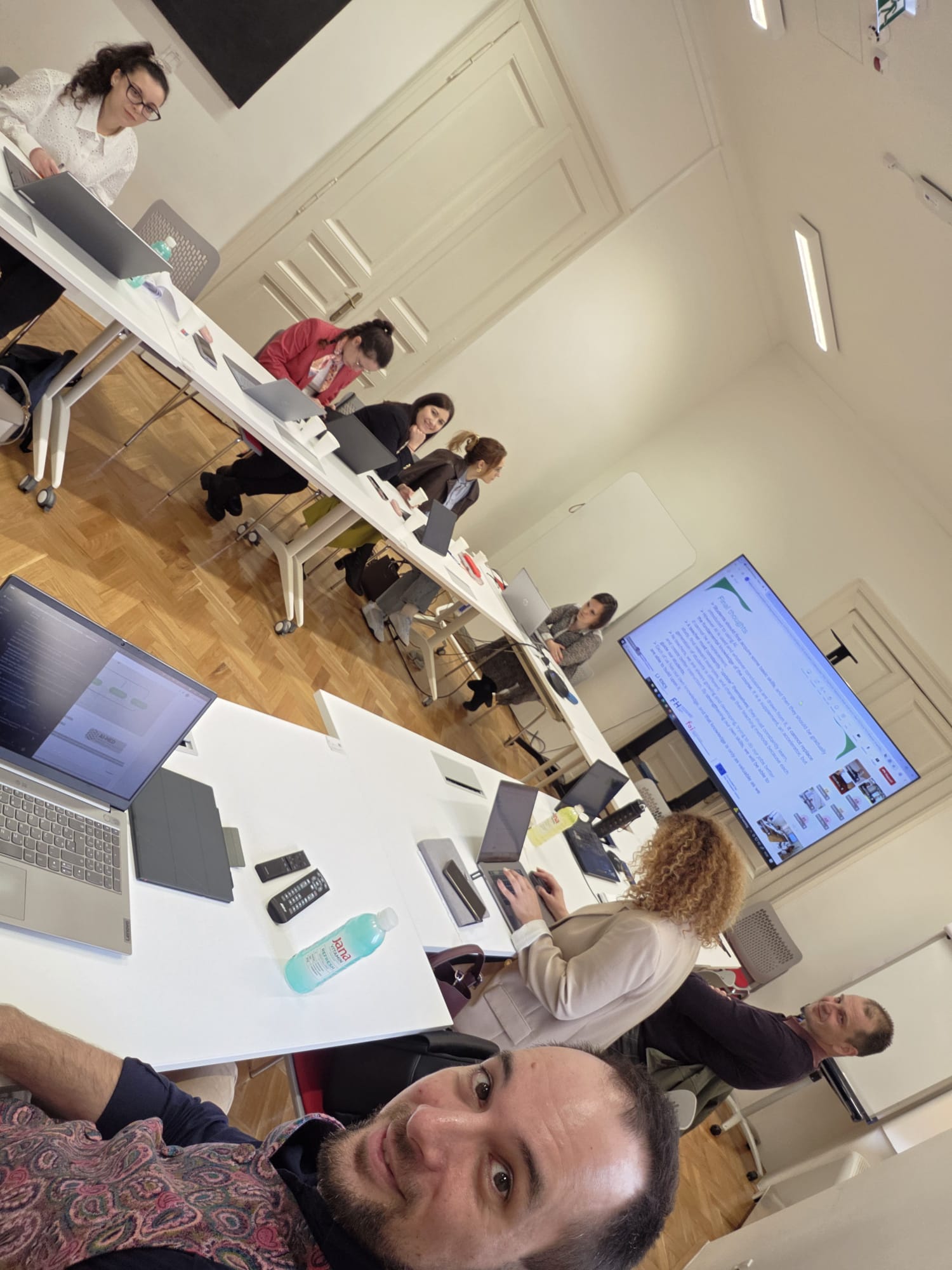
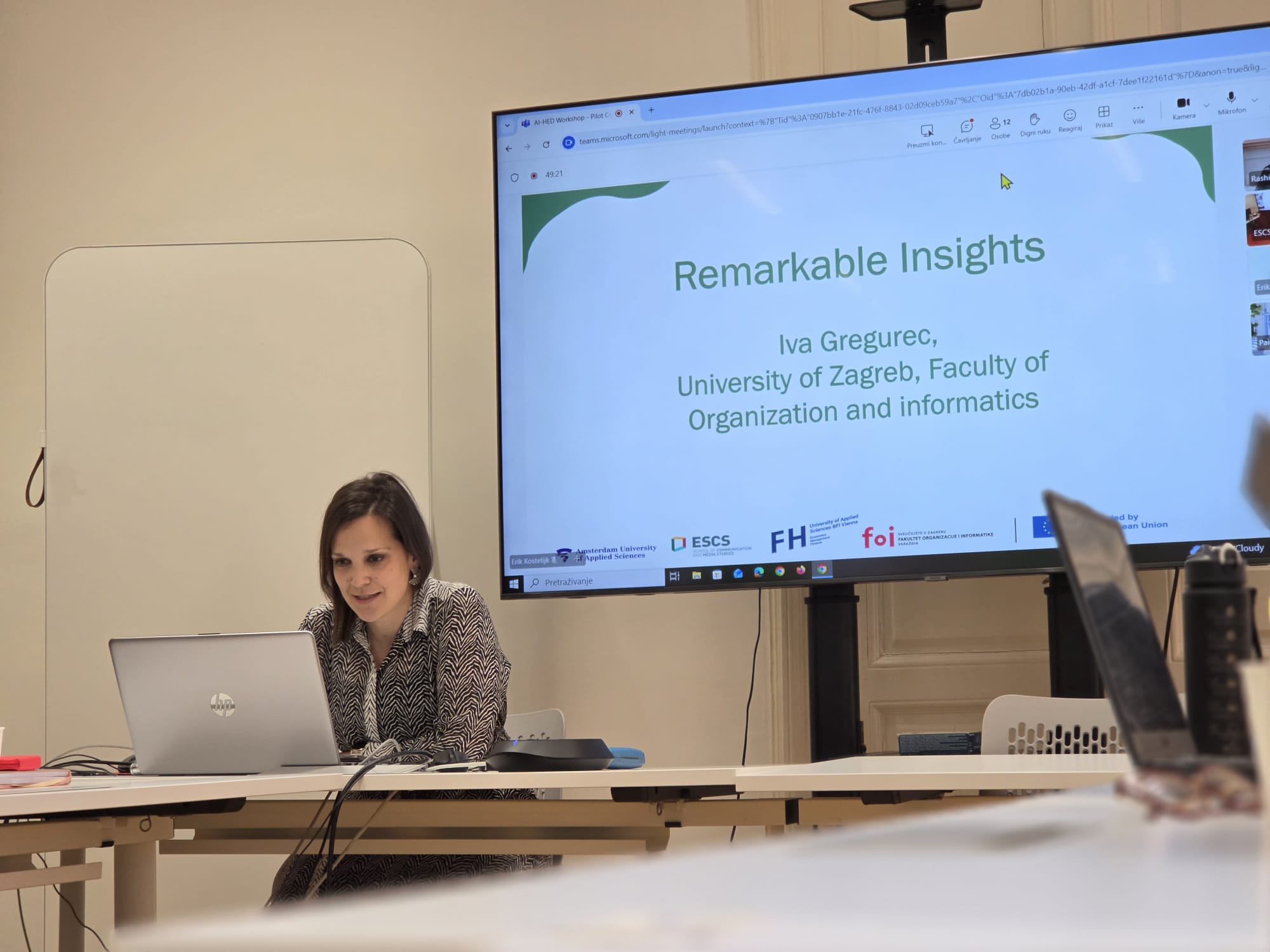
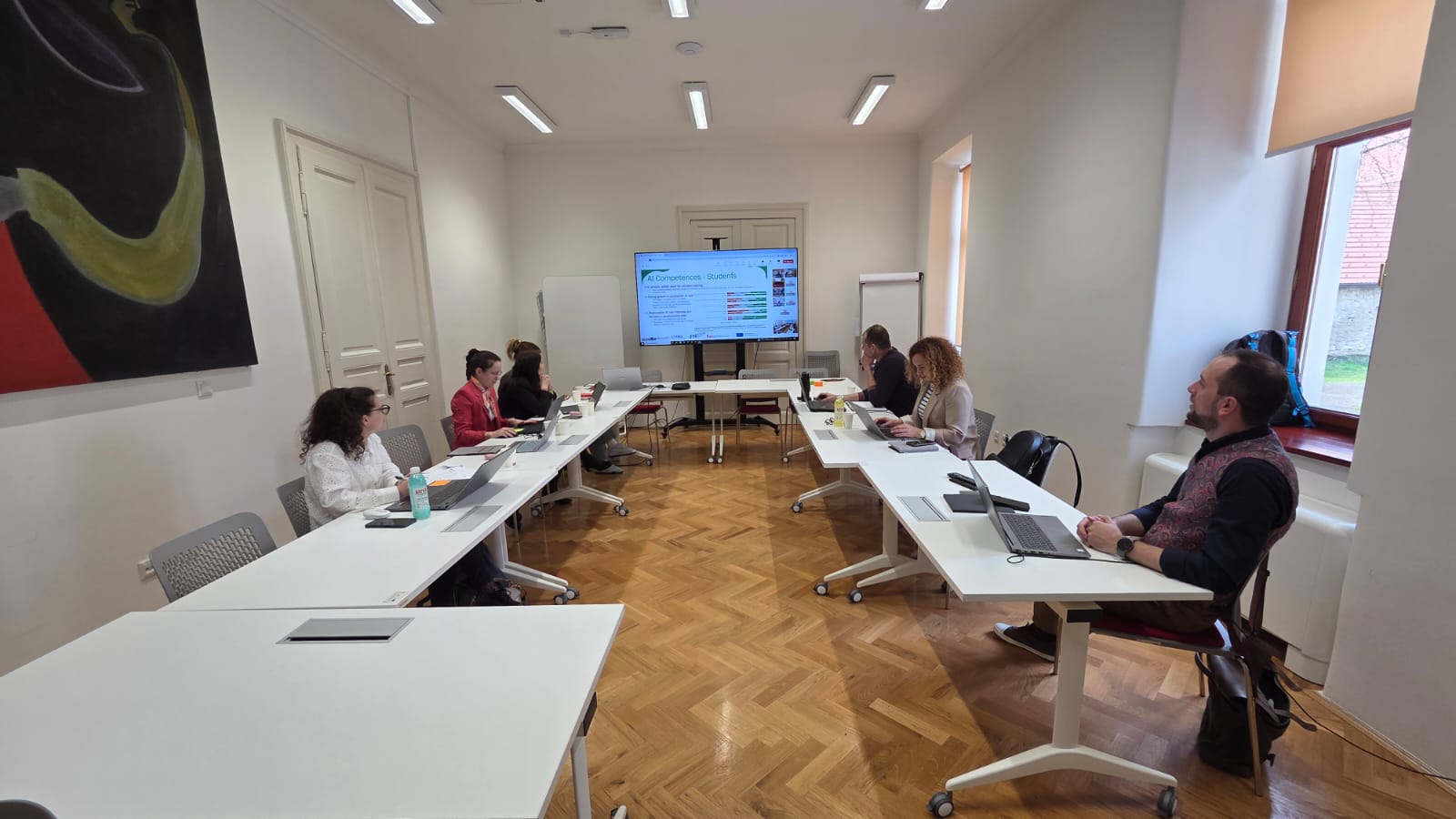
On March 18, 2026, the AI-HED Pilot Semester Follow-Up Workshop took place, marking a key milestone in the European project AI-HED – Artificial Intelligence in Higher Education Teaching and Learning.
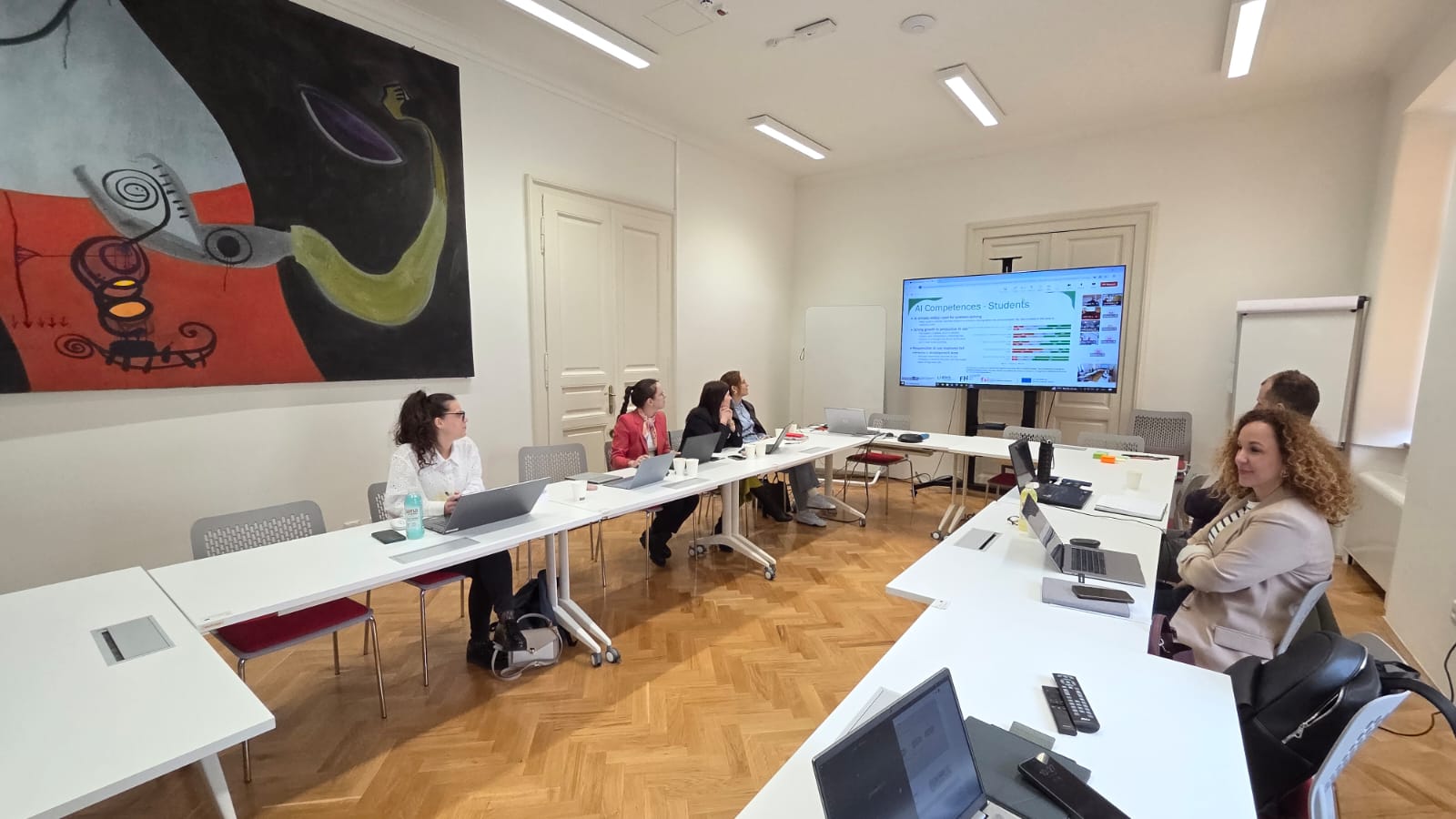
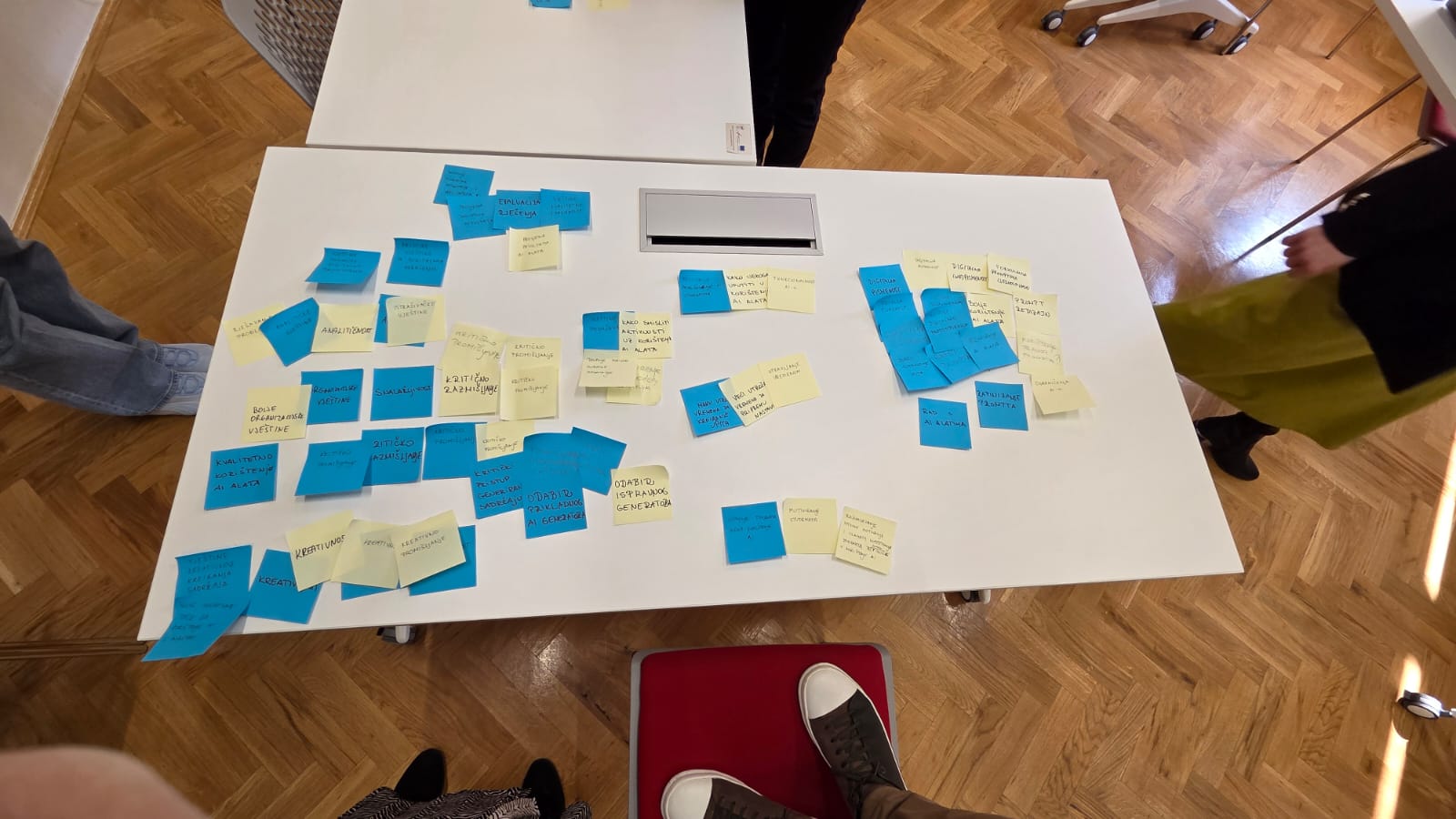
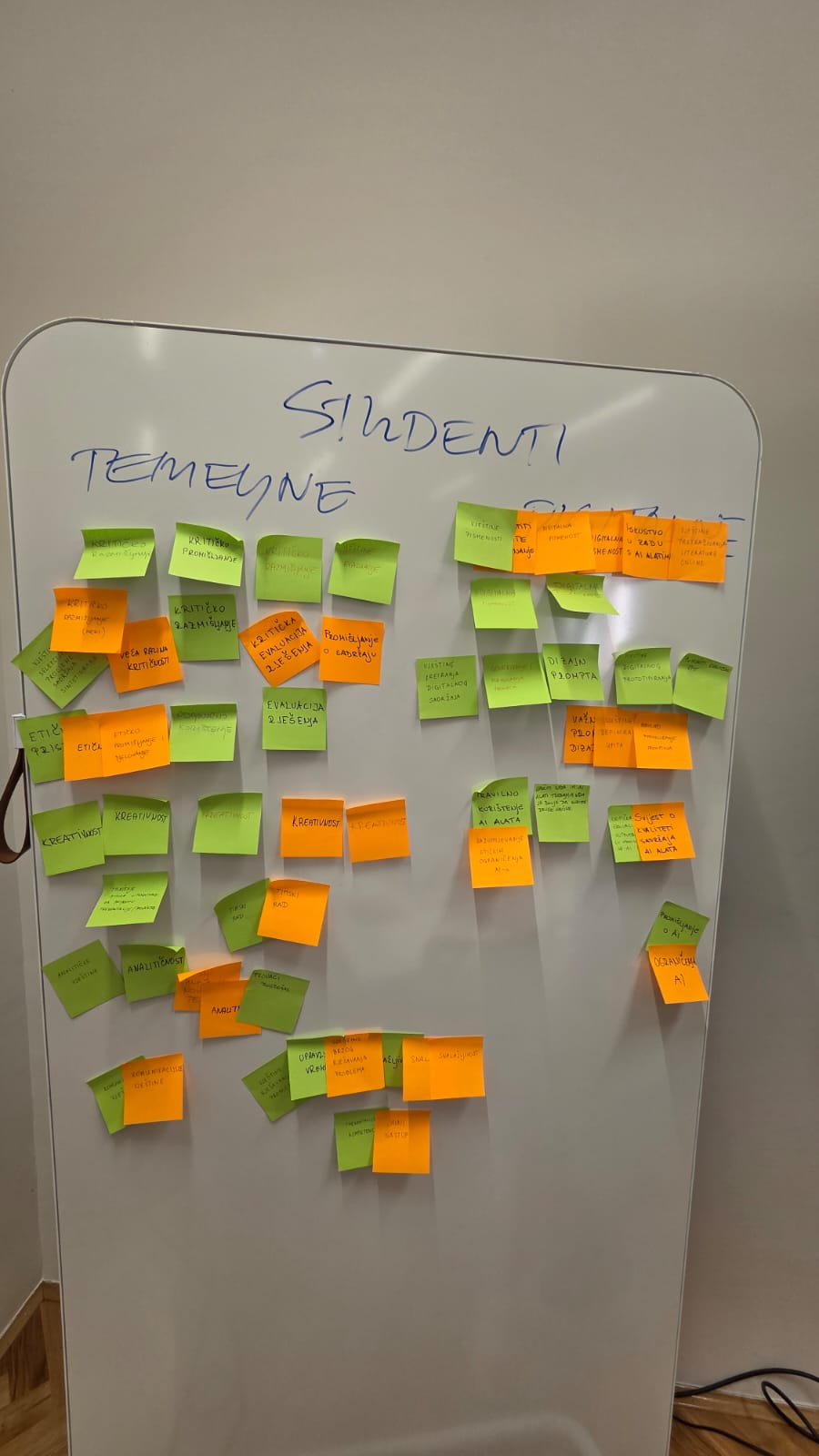
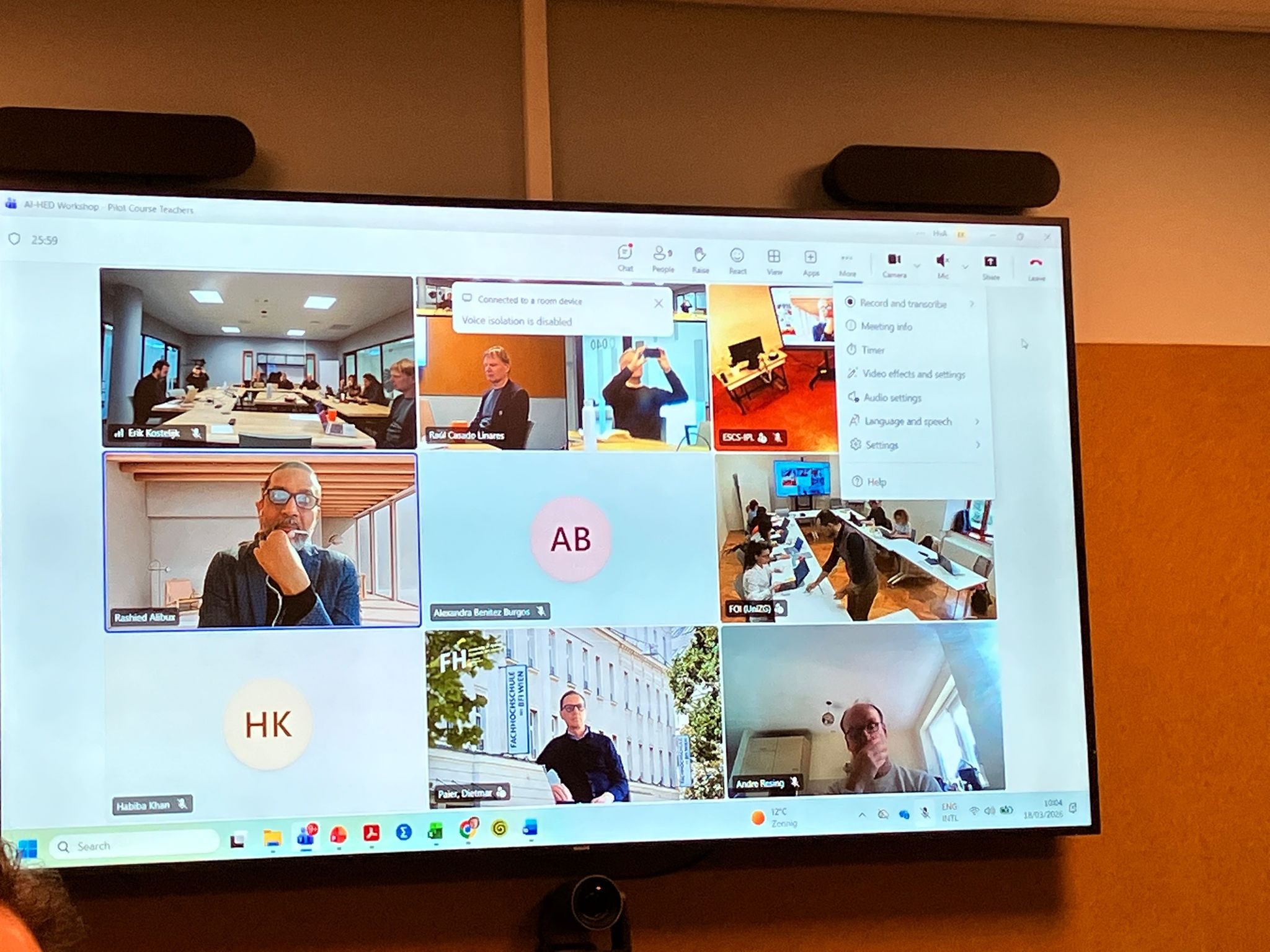
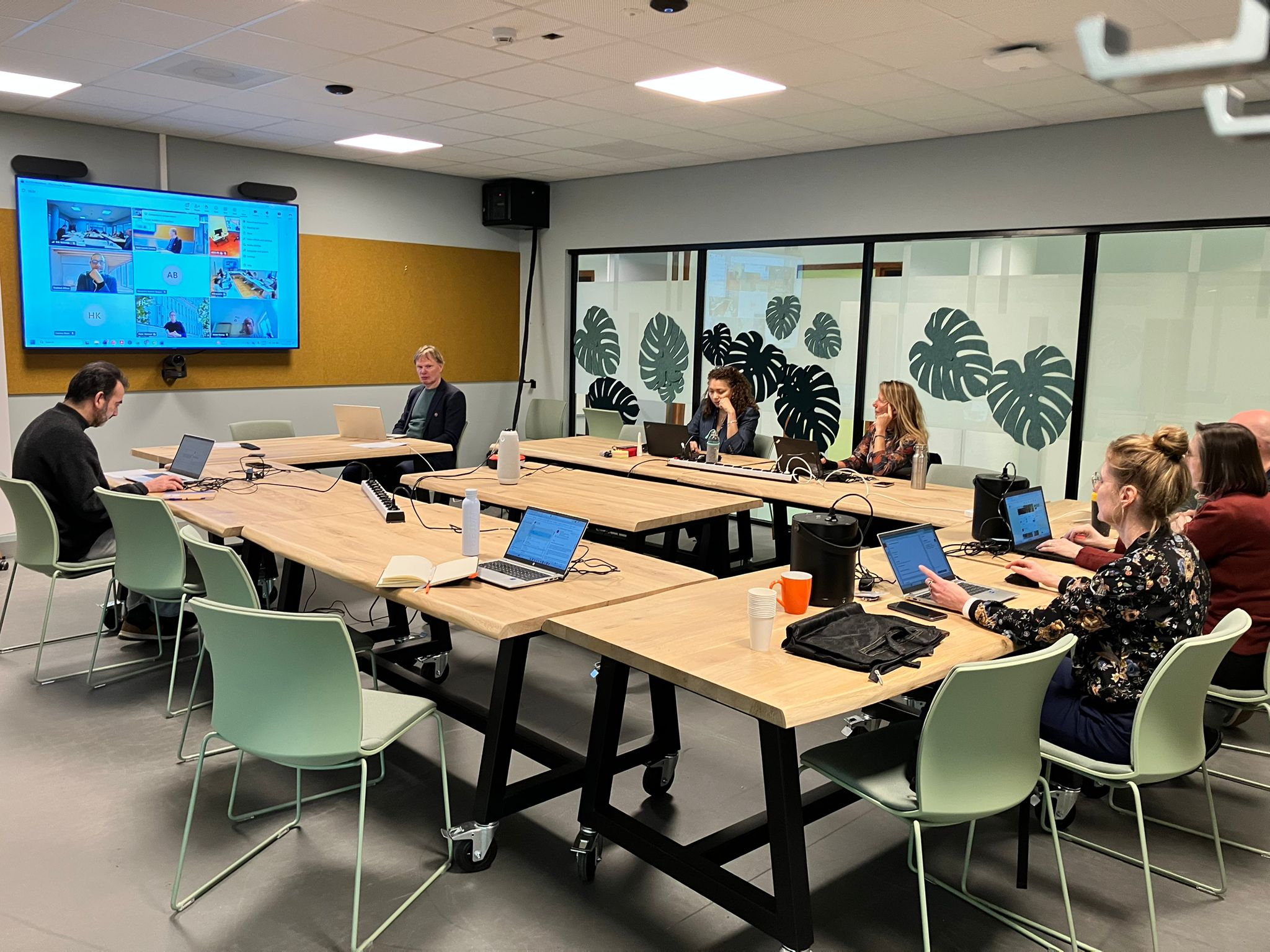
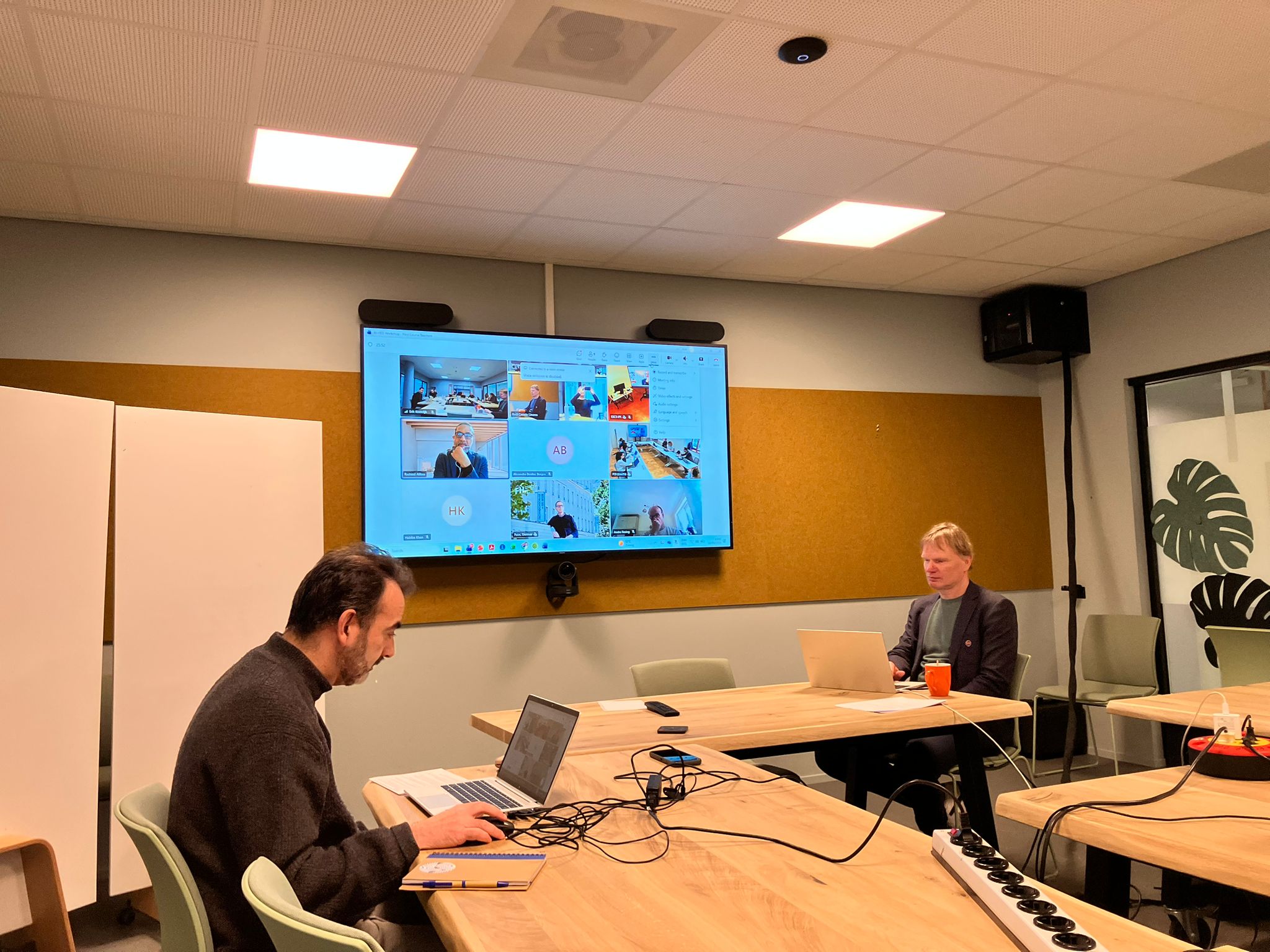
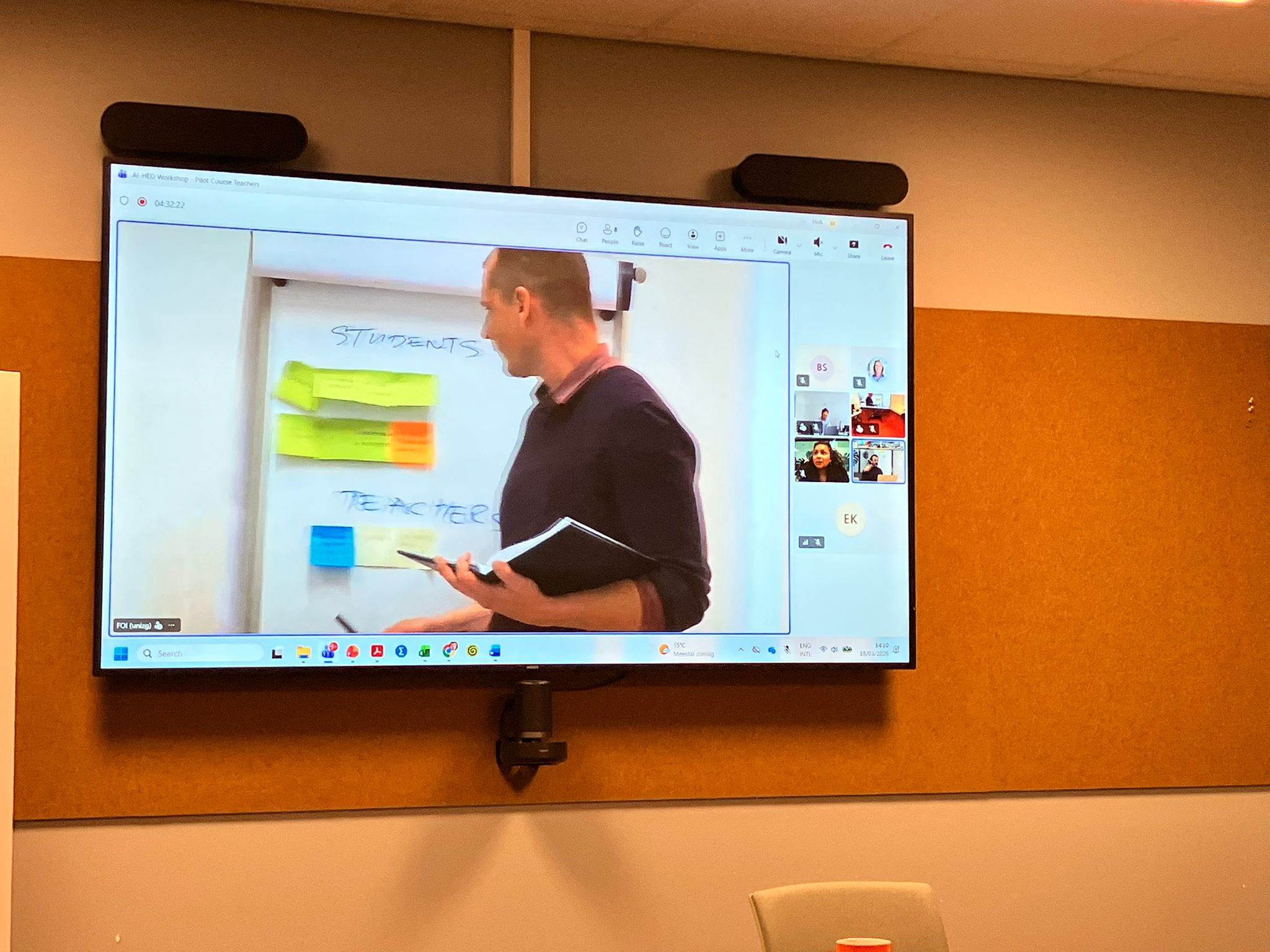
The workshop was held in a hybrid format, combining a centralised online session with local discussions across partner institutions, engaging lecturers involved in the implementation of the pilot courses.
A project addressing a structural shift in higher education
AI-HED is an Erasmus+ Cooperation Partnership project that brings together four European higher education institutions. It aims to explore the impact of artificial intelligence in real teaching contexts, strengthen AI-related competences among teachers and students, and generate evidence-based recommendations for higher education.
During the pilot semester, 24 AI-enhanced courses were implemented, involving more than 1,100 students across diverse fields such as communication, marketing, journalism, political science, and digital transformation.
AI-Enhanced Courses
Students
Teachers Recommend AI Integration
Key findings: increased use, stronger competencies, greater confidence
The results presented during the workshop highlight several important developments:
- Increased use of AI for study purposes, with a notable rise in daily usage among students
- Growth in digital competences, particularly in content creation and collaboration
- Deeper cognitive engagement with AI, with significant progress at higher levels of Bloom’s taxonomy (analyse, evaluate, create)
- Higher confidence and more positive attitudes towards AI among both students and teachers
The findings also show that while AI was already widely used for problem-solving, the pilot semester significantly expanded its role as a productive and creative learning tool.
AI as a tool, a partner, and an object of critical reflection
A central contribution of the workshop was the discussion of qualitative insights gathered from focus groups and teaching experiences.
Key reflections include:
- A shift in perception from AI as something forbidden to a core competence to be developed
- The emergence of both a functional and relational perspective, with students often describing AI as a “learning partner”
- Recognition that AI can be both a catalyst for ideas and a limitation to creativity, depending on how it is used
- Concerns about dependency preceding literacy, highlighting the need for critical AI education
From a pedagogical perspective, participants emphasised that the impact of AI depends less on the technology itself and more on the pedagogical design guiding its use.
Rethinking teaching and assessment
The workshop highlighted the need to rethink core teaching practices:
- Moving from product-based assessment to process-oriented evaluation
- Designing structured activities that promote critical and responsible AI use
- Embedding AI literacy from the early stages of higher education
- Developing clear institutional guidelines and ensuring equitable access to AI tools
Prompting also emerged as a key competence, directly influencing the quality of AI outputs and learning outcomes.
Best practices: learning through experimentation
The workshop featured best practice examples from all partner institutions, showcasing innovative pedagogical approaches such as:
- Comparing AI-generated and human-generated outputs to foster critical thinking
- Integrating AI into project-based learning while maintaining research validation
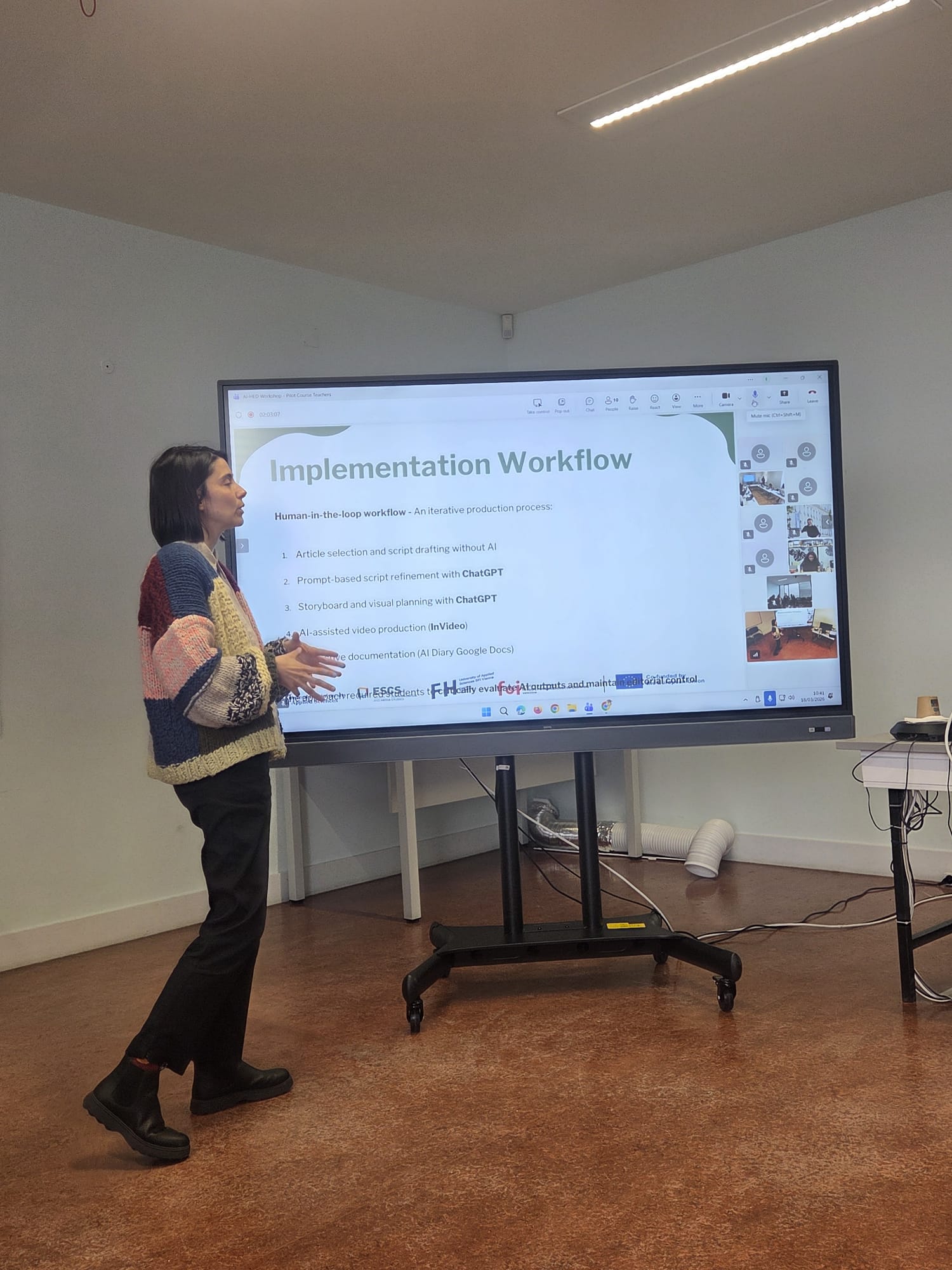
- Applying human-in-the-loop models to ensure editorial control and reflection
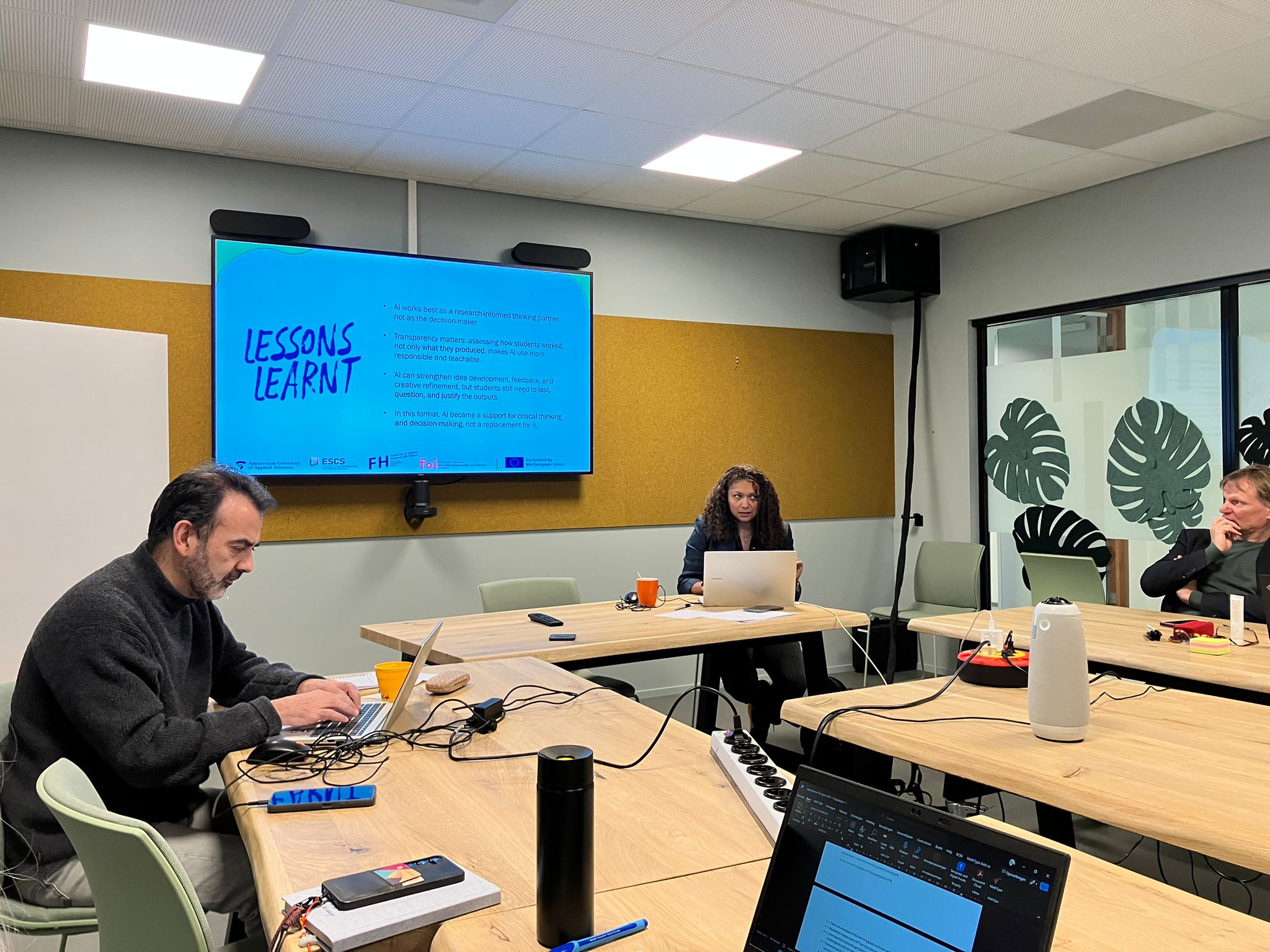
- Assessing transparency and decision-making processes, rather than only final outputs
A shared conclusion emerged: Transparency matters — assessing how students worked, not only what they produced, makes AI use more responsible and teachable.
A growing consensus
Despite different institutional contexts, one finding stands out: 70% of teachers strongly recommend integrating AI into higher education, with no opposition reported after the pilot semester.
Looking ahead
The workshop represents an important step in consolidating the knowledge generated within AI-HED and sets the stage for the next phase: presenting all the consolidated results from the pilot courses implementation, developing recommendations and scaling best practices across the higher education sector.
More than a technological tool, AI is becoming a structural element in how we teach, learn, and envision the future of higher education.
Workshop in Photos
March 2026
Zagreb
Amsterdam


Lisbon