Higher Education
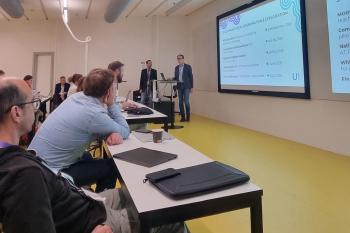
AI-HED Project presented at 'U!REKA Connects' in Helsinki
On 22 May, Dietmar Paier and Johannes Wetzinger from the University of Applied Sciences BFI Vienna presented the Erasmus+ project “Artificial Intelligence in Higher Education Teaching and Learning” (AI-HED) at the “U!REKA Connects 2025” event in Helsinki. “U!REKA Connects” is the annual flagship event of the “Urban Research and Education Knowledge Alliance” (U!REKA). U!REKA is a European University Alliance comprising 30 institutions from across Europe, including higher education institutions, cities, regional and district councils, and European networks. This year, the event took place at the Metropolia University of Applied Sciences in Helsinki, Finland, on 21 and 22 May. More than 400 representatives from the U!REKA network participated in the gathering.
Read more

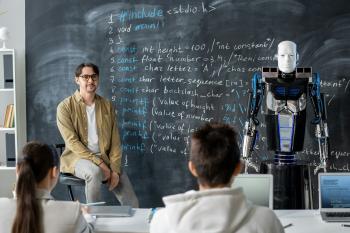
The Need for Improved AI Literacy in Higher Education
Artificial intelligence (AI) is not just a passing technological disruption—it represents a fundamental shift in how knowledge is created, accessed, and applied. Much like the introduction of calculators or the internet transformed education, AI is redefining the learning landscape. Yet, many higher education institutions remain focused on detecting AI use in student work rather than preparing students to critically engage with it.
Rather than treating AI as a threat to academic integrity, universities should view AI literacy as a core competency essential for the future workforce. AI is reshaping industries from journalism and law to medicine and finance, necessitating a new skill set that includes verifying AI-generated content, recognizing biases, and understanding the probabilistic nature of AI outputs. By shifting from detection to education, universities can ensure that both students and faculty develop the skills to navigate an AI-driven world responsibly, ethically, and effectively.
Read more

The Dawn of Truly Personalized Learning
For years, universities have been struggling with a challenge: how to accommodate students’ different learning styles in a system that relies on uniformity The rise of generative AI offers a refreshing approach to this problem.
Traditional teaching methods often fail to take into account the diverse preferences of students. Some people understand concepts better through conversation, while others do better with written material. Until recently, scaling such customized approaches seemed unattainable. However, generative AI is changing this reality.
Read more